Introduction
Personalized baby clothes offer a simple way to make everyday outfits, gifts, and special occasions more memorable. With custom baby clothes printing, you can add a baby's name, birth details, photographs, illustrations, or meaningful messages to onesies, bodysuits, rompers, and other baby apparel.
Ordering personalized baby clothes online makes the process convenient. You can select a garment, upload your artwork, review the design preview, and place an order without visiting a physical store. Many services also accept individual orders, making it easier to create a unique outfit without purchasing in bulk.
This guide covers the types of baby clothes you can customize, printing methods and fabric options, where to order online, pricing factors, and what to consider before purchasing.
What Is Custom Baby Clothes Printing?
Custom baby clothes printing is the process of adding personalized designs to baby garments using printing or decoration techniques. Instead of choosing only ready-made patterns, you can customize an outfit with text, graphics, photographs, or branding.
Many online providers offer print on demand apparel for newborns, allowing customers to order individual pieces without purchasing large quantities in advance. This model is useful for parents creating a one-off gift, businesses testing baby apparel designs, and entrepreneurs launching a baby clothing brand.
Print-on-demand describes the production and fulfillment model rather than a specific printing technique. The actual decoration method may be direct-to-garment (DTG), direct-to-film (DTF), or embroidery, depending on the provider, garment, and design.
What Types of Baby Clothes and Designs Can You Customize?
You can personalize several types of baby apparel, from everyday bodysuits to special-occasion outfits. The best choice depends on the garment's purpose, available sizes, and the design you want to create.
1. Baby Onesies and Bodysuits
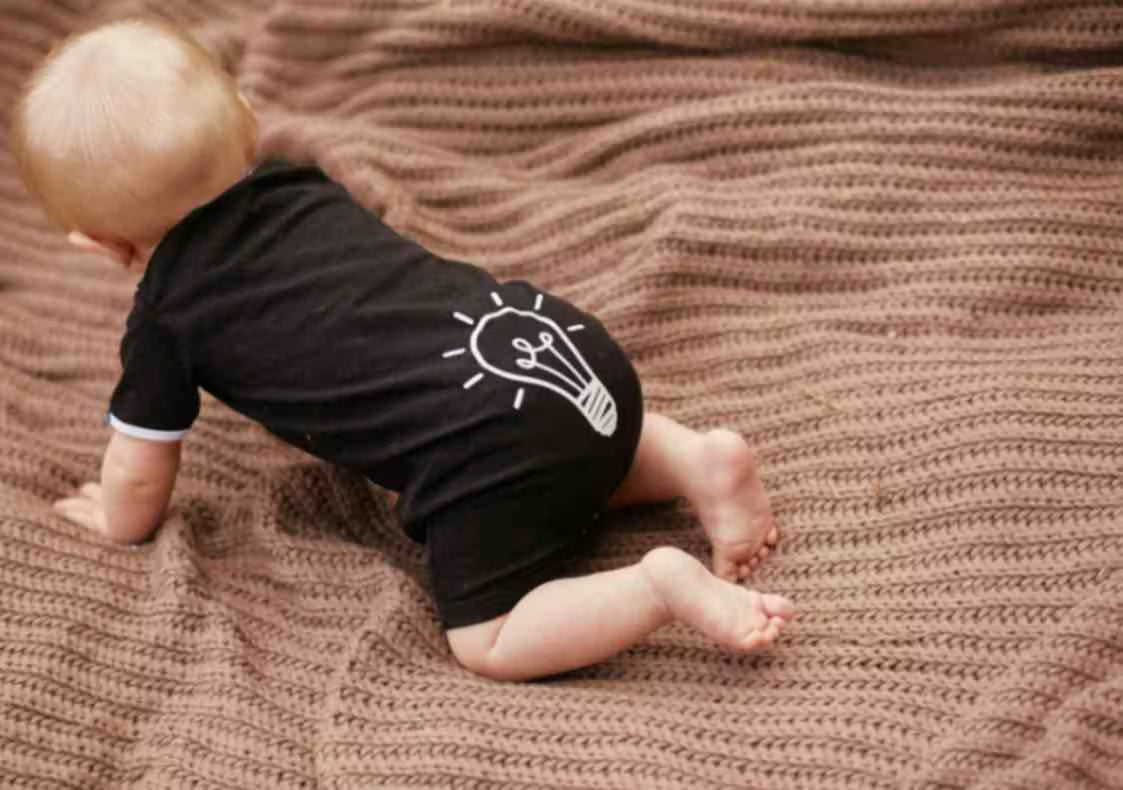
Baby onesies and bodysuits are popular choices for custom baby clothes printing because they are practical for everyday wear and easy to personalize. You can add a baby's name, birth date, simple illustrations, or a short message.
Both short-sleeve and long-sleeve options are commonly available, depending on the provider's collection. A custom print baby onesie can also make a thoughtful gift for new parents or a memorable outfit for a newborn photoshoot.
2. Personalized Baby Rompers
Personalized baby rompers work well for milestone photos, birthdays, family gatherings, and gifts. Names, themed graphics, and playful messages can make a simple romper more distinctive.
3. Baby T-Shirts and Matching Outfits
Custom baby T-shirts provide more space for larger graphics, slogans, and illustrations. You can also create custom baby outfits by coordinating a baby's T-shirt, bodysuit, or romper with matching designs for siblings or parents.
4. Popular Design Ideas for Baby Clothes
Several types of artwork and personalization can be used to create printed baby clothes, including:
-
Names and birth details: Add the baby's name, date of birth, or initials.
-
Photos and illustrations: Use family photographs, animal graphics, cartoons, or original artwork.
-
Milestone designs: Create outfits for monthly photos, first birthdays, or other memorable moments.
-
Funny messages and quotes: Add playful phrases or short messages from family members.
-
Matching themes: Coordinate baby clothes with family outfits for celebrations, holidays, or photoshoots.
Keep the artwork clear and appropriately sized for the garment. Baby clothing has limited print space, so simple layouts are often easier to read and look more balanced. Before submitting a design, check the provider's file requirements and preview how the artwork fits the selected garment.
Which Printing Method and Fabric Should You Choose?
The printing method determines how your design appears on the garment, while fabric choice affects its softness, comfort, and overall feel. Consider both when comparing baby clothes printing options.
Which Printing Method Is Best for Custom Baby Clothes?
DTG, DTF, and embroidery each produce a different finish. The best option depends on your artwork, garment material, and preferred appearance.
|
Printing Method |
How It Works |
Best For |
What to Consider |
|
DTG Printing |
Applies ink directly to the fabric. |
Detailed artwork, colorful graphics, and photographs |
Generally works best on cotton and cotton-rich garments. |
|
DTF Printing |
Transfers a design from printed film onto fabric using heat and pressure. |
Bold graphics, colorful designs, and different fabric types |
The transfer may feel more noticeable on the fabric than DTG. |
|
Embroidery |
Uses stitched threads to create a design. |
Names, initials, and simple logos. |
Avoid bulky stitching or rough areas against the baby's skin. |
Which Fabric Is Suitable for Baby Clothes Printing?
Fabric affects garment comfort and printing compatibility. Common options include:
-
Cotton: A popular choice because it is soft and breathable, making it suitable for everyday baby clothing.
-
Combed ring-spun cotton: Made using a process that produces smoother, finer yarn, giving garments a softer feel.
-
Organic cotton: An option for buyers who prefer cotton grown under organic production standards. Check the product's certification if this matters to you.
-
Cotton blends: These may provide additional stretch or durability, depending on the material composition.
Before ordering, check the garment composition and whether it is compatible with the selected decoration method. For baby clothing, also look for secure decoration, a smooth inside finish, and clear product-care instructions.
Where Can You Order Custom Baby Clothes Online?
You can order custom baby clothes through print-on-demand platforms, personalized baby clothing stores, and custom apparel printing services. Each option serves different needs, from purchasing one personalized outfit to launching an online clothing business or placing a bulk order.
1. Print-on-Demand Platforms
These platforms produce items when an order is placed, eliminating the need to purchase and store inventory in advance. They are particularly useful for entrepreneurs testing baby apparel designs or selling through ecommerce stores and online marketplaces.
Some platforms also provide sample orders, bulk pricing, and integrations with online stores.
2. Personalized Baby Clothing Stores
Specialized baby clothing stores focus on individual purchases and personalized gifts. They are commonly used for baby showers, birth announcements, birthdays, and milestone celebrations.
3. Custom Apparel Printing Services
These services cater to customers who need customized apparel for individual or larger orders. Depending on the provider, they may offer different order quantities, production arrangements, and design assistance.
What Should You Check Before Choosing a Service?
Before placing an order, compare providers based on these factors:
-
Minimum order requirements: Confirm whether you can purchase a single item or need to meet a minimum quantity.
-
Sample orders: Check whether samples are available before committing to a larger purchase.
-
Production time: Understand how long preparation and fulfillment take.
-
Total cost: Include product pricing, customization charges, shipping, and any additional fees.
-
Shipping coverage: Confirm whether the provider delivers to your location and check estimated delivery dates.
-
Returns and replacements: Review the policies for damaged, incorrect, or defective orders.
-
Customer feedback: Read reviews to understand other buyers' experiences with order fulfillment and customer support.
How Much Does Custom Baby Clothes Printing Cost?
Pricing for custom baby clothes printing varies based on the type of garment, the artwork you choose, the printing technique, the number of pieces ordered, and delivery costs. A single personalized onesie may cost more per piece than the same design ordered in bulk.
Here are the main factors that influence the price:
-
Garment type: The base price varies depending on the clothing style, fabric, and brand.
-
Printing method: DTG, DTF, and embroidery have different production costs. Embroidery and complex designs may cost more depending on the work involved.
-
Design complexity: Large, detailed, or multi-location designs can increase customization costs.
-
Order quantity: Bulk orders may reduce the per-piece price, while individual orders generally have a higher unit cost.
-
Additional charges: Setup fees, packaging, shipping, and taxes can increase the final amount.
To manage your budget, compare the complete cost across providers rather than looking only at the advertised garment price. If you need multiple outfits, check whether bulk pricing is available. For a single purchase, confirm that there are no unexpected setup fees or minimum-order charges.
How to Order Custom Baby Clothes Online?
Ordering custom baby clothes online is straightforward when you know what to prepare and what to check before checkout. Follow these steps to reduce common ordering mistakes.
1. Choose the Garment and Size
Select the baby clothing item you want to customize and check the available size options. Refer to the provider's size chart rather than relying only on age labels, as sizing can vary between manufacturers.
2. Prepare Your Design
Create your artwork or gather the image, text, or other details you want to include. Use a high-resolution image to avoid blurry or pixelated prints. Check the provider's accepted file formats and design requirements before uploading.
3. Review the Design Preview
Position your artwork and review the preview carefully. Check spelling, image quality, colors, alignment, and placement to make sure everything appears as intended.
4. Confirm the Order Details
Before checkout, verify the garment size, quantity, customization details, total price, shipping address, and estimated delivery date. Read the return or replacement policy, particularly for personalized products.
5. Place Your Order and Track Delivery
Complete the payment using an available payment method and save the order confirmation. Use the tracking information provided to monitor the shipment and check the package when it arrives.
How to Wash and Care for Printed Baby Clothes?
Proper care helps maintain the appearance of printed baby clothes and prevents unnecessary wear. Always follow the garment manufacturer's care label and any additional instructions provided by the printing service.
Here are some general care tips:
-
Wash inside out: Turn printed garments inside out to reduce friction against the decorated surface.
-
Use a gentle wash cycle: Choose a mild detergent and a suitable gentle cycle to help protect the fabric and design.
-
Avoid excessive heat: Follow the recommended washing temperature and avoid high-temperature drying unless the care label permits it.
-
Protect the printed area when ironing: If ironing is allowed, turn the garment inside out or use a protective cloth, following the manufacturer's instructions.
-
Treat stains carefully: Avoid harsh chemicals or abrasive scrubbing that may damage the fabric or decoration.
Following the correct care instructions can help printed baby clothes retain their appearance through regular use and washing.
Also Read: Custom T-Shirts for Schools in NYC: Complete Bulk Order Checklist
Frequently Asked Questions
Q1):- Can I Customize Baby Clothes With Handwritten Messages?
Ans:- Yes, handwritten messages can be converted into digital artwork and printed on baby clothing. Scan or photograph the handwriting clearly before uploading it.
Q2):- What Image Resolution Is Best for Custom Baby Clothes Printing?
Ans:- A high-resolution image is recommended for clear results, especially when printing photographs or detailed graphics. A resolution of 300 DPI at the intended print size is a common print-quality guideline, but always follows the provider's specific artwork requirements.
Q3):- Are Custom-Printed Baby Clothes Suitable for Everyday Wear?
Ans:- They can be suitable for everyday wear when the garment and decoration are appropriate for regular use. Check the product's construction, decoration finish, and care instructions before purchasing.
Q4):- What Should I Do If My Custom Baby Clothes Arrive With a Printing Error?
Ans:- If your custom baby clothes arrive with a misprint, incorrect design, or damaged artwork, notify the printing provider and explain the issue with supporting photos and your purchase details. Check the seller's return, replacement, or refund terms to find out what solutions are available.
Q5):- Can I Order Just One Custom Baby Outfit?
Ans:- Yes, many print-on-demand and personalized clothing services accept single-item orders. However, some custom printing providers have minimum order requirements, so confirm the policy before purchasing.
Q6):- Can I Customize Baby Clothes for Twins?
Yes, you can create coordinated outfits for twins using matching names, complementary illustrations, or different messages within the same theme. Check whether the provider allows design variations within one order.
Q7):- Can I Use Copyrighted Characters on Custom Baby Clothes?
Not without the appropriate permission or license. Cartoon characters, movie artwork, sports logos, and branded graphics may be protected by intellectual property laws. Use original artwork or properly licensed designs, especially when creating clothing for commercial sale.
Q8):- Can I Create Matching Baby Clothes for Parents and Siblings?
Yes, you can create coordinated family outfits using matching colors, illustrations, or related messages. These sets are often chosen for family photoshoots, holidays, and special celebrations.
Conclusion
Custom baby clothes printing makes it easy to turn everyday baby garments into personalized outfits, thoughtful gifts, and memorable keepsakes. Whether you're customizing onesies, rompers, or matching family outfits, choosing comfortable fabrics, clear designs, and reliable printing services helps achieve the best results.
Looking to create personalized baby outfits? Aesthetic BK offers custom apparel printing services to bring your creative designs to life with quality prints on custom clothing.

Leave a comment
All comments are moderated before being published.
This site is protected by hCaptcha and the hCaptcha Privacy Policy and Terms of Service apply.