
Introduction
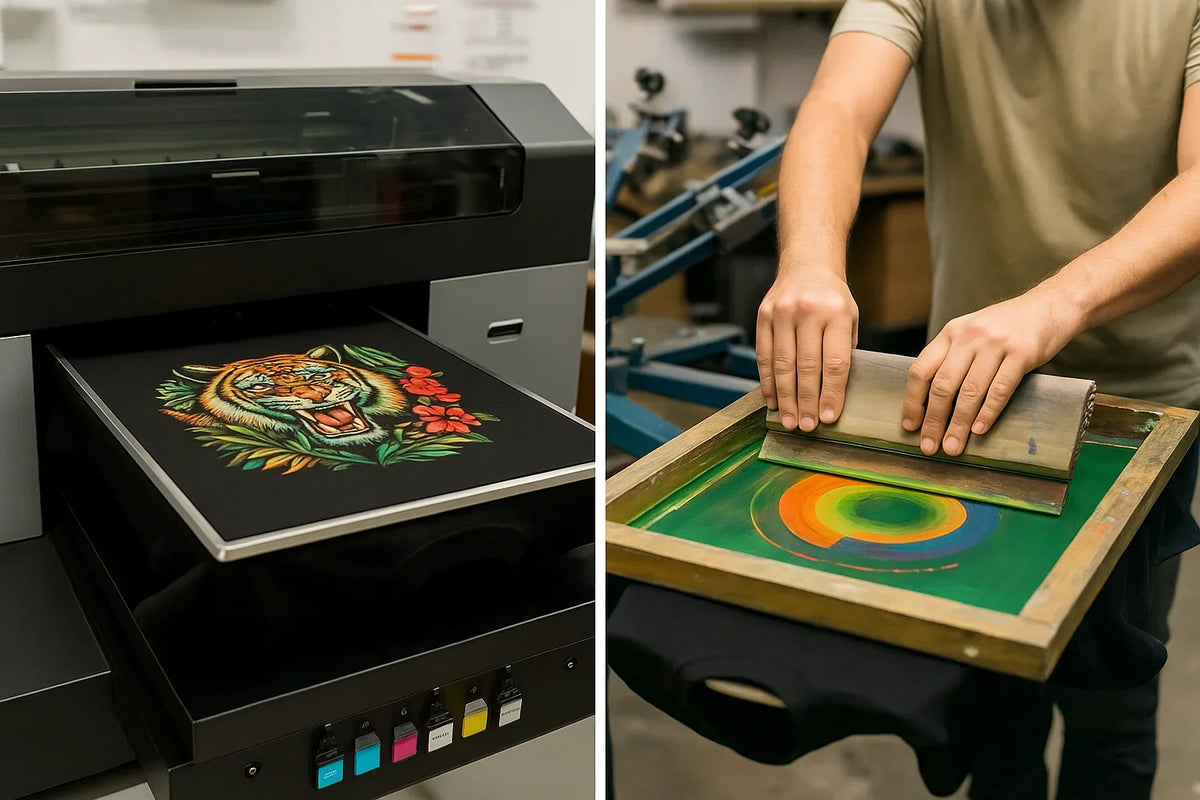
Trying to decide between DTG Printing vs Screen Printing can feel overwhelming, especially if you're new to custom apparel. Maybe you're starting a clothing brand, launching merch, or ordering shirts for an event — and now you’re stuck wondering which printing method will actually give you the results you want.
The truth is, both options are great, but they’re built for different needs. DTG printing is perfect for colorful, detailed designs and small orders, while screen printing is known for bold graphics and cost-effective bulk production.
Understanding the key differences in DTG Printing vs Screen Printing will help you avoid common mistakes and choose the best method for your design, budget, and order size.
Key Takeaways
- DTG Printing is best for small batches, detailed designs, and full-color prints. Ideal for on-demand DTG printing and custom DTG prints.
- Screen Printing is perfect for bulk orders, bold graphics, and long-lasting durability. Supports specialty inks like metallic and neon.
- DTG works best on cotton fabrics, while screen printing works on almost any material.
- DTG has lower setup costs for small runs, while screen printing is cheaper per shirt for large orders.
What Is DTG (Direct-to-Garment) Printing?
DTG (Direct-to-Garment) printing is a modern digital technique that allows you to print detailed artwork directly onto fabric—almost like printing a photo from your computer, but on a t-shirt.

This method is especially popular among small business owners, online brands, and independent artists because it produces high-quality prints without requiring large orders. It’s the go-to choice for t-shirt direct to garment designs, one-off custom apparel printing, and fast DTG on demand production.
How DTG Printing Works (Simple 3-Step Process)
1. Pre-Treatment The garment is pre-treated to help the ink bond properly with the fibers, ensuring vibrant colors and sharp details.
2. Printing A DTG printer sprays water-based CMYK inks directly onto the shirt. For dark fabrics, a white underbase is applied first, followed by the full-color design.
3. Curing The printed shirt is heat-pressed to cure the ink into the fibers, making the design permanent.
That’s it—no screens, no color limitations, and no complicated setup.
Benefits of DTG Printing
- Unlimited colors with smooth gradients and photo-realistic details
- Perfect for on-demand DTG printing and small orders
- No setup fees or minimum quantities
- Fast production, ideal for online stores and quick drops
- Eco-friendly water-based inks
- Great for custom DTG printing and full-color artwork
If your design includes gradients, portraits, or complex details, DTG will capture every element beautifully.
Limitations of DTG Printing
- Slower for large quantities
- Higher cost per shirt compared to bulk screen printing
- Works best on cotton or cotton-blend fabrics
- Durability is good but not as long-lasting as screen printing
- Doesn’t support specialty inks like metallic, neon, or puff finishes
So when comparing direct to garment printing vs screen printing, think of DTG as the flexible, detail-oriented option—best suited for small runs, personalized apparel, and intricate designs.
What Is Screen Printing?
Screen printing is a traditional technique where ink is pushed through mesh screens directly onto fabric. Each color in the design requires its own screen, which is why this method works best for bold, simple artwork and larger order sizes.

Even though screen printing involves more preparation compared to DTG and screen printing, it remains the industry favorite for bulk t-shirt production, merch drops, sports teams, and corporate apparel. The reason? Its long-lasting results and cost efficiency.
How Screen Printing Works (Step-by-Step)
1. Screen Creation Each color in your design gets its own mesh screen. The design is burned onto the screen, creating areas where ink can pass through.
2. Screen Setup All screens are aligned and set up on the press. This ensures perfect positioning and color accuracy.
3. Production Ink is pushed through each screen and onto the fabric. For multi-color designs, this process repeats for every color used.
4. Curing After printing, the shirt goes through a dryer to cure the ink, making the design extremely durable.
While the process takes more setup time than t-shirt direct to garment printing, it becomes highly efficient once the screens are ready.
Benefits of Screen Printing
Screen printing is a powerhouse when it comes to durability and bulk production. Here’s why many businesses still choose it over DTG:
- Ideal for large orders
- Extremely long-lasting prints that hold up after countless washes
- Lowest cost per unit when printing in bulk
- Works on almost any material—cotton, polyester, blends, nylon, wood, plastic, and more
- Supports specialty inks like puff, glitter, foil, neon, and metallic finishes
If you want bold, vibrant, long-lasting prints for hundreds or thousands of shirts, screen printing is the clear winner in the DTG Printing vs Screen Printing comparison.
Drawbacks of Screen Printing
Of course, screen printing isn’t perfect for every job. Here are the main limitations:
- Not cost-effective for small runs
- Limited ability to blend gradients or photo-realistic details
- Higher setup time and preparation
- More waste and chemical use compared to DTG
- Extra screens required for every color
This is why many brands choose DTG for small batches and screen printing for large-scale production—each method shines in different scenarios.
Direct-to-Garment vs Screen Printing — Which Works Best for Your Shirts?
Now that you understand how both methods work, let’s compare DTG Printing vs Screen Printing side by side. This breakdown will help you quickly decide which method fits your artwork, order size, and budget.

1):- Print Quality
-
DTG Printing: Delivers photo-quality results, smooth gradients, and unlimited colors. Perfect for portraits, artistic illustrations, and full-color t-shirt designs.
- Screen Printing: Best for bold, simple, high-contrast designs. Produces vibrant solid colors that pop but struggles with gradients and hyper-detailed artwork.
If your design includes shading or realistic images, direct to garment printing vs screen printing — DTG wins in detail.
2):- Design Flexibility
- DTG: Works beautifully with complex or colorful designs, making it ideal for digital artwork or multi-color prints.
- Screen Printing: Better suited for simplistic logos, text-based designs, and bold visuals.
For brands relying on detailed artwork, DTG custom prints are the better match.
3):- Order Size Suitability
-
DTG: Perfect for small runs (1–20 shirts). No screens required, making it ideal for DTG printing online, print-on-demand shops, or testing new designs.
-
Screen Printing: Best for bulk orders (50, 100, 500, or even 1,000+ shirts). Once set up, it becomes extremely efficient for large volumes.
4):- Cost Breakdown
|
Quantity |
DTG Cost |
Screen Printing Cost |
|
1–20 shirts |
Lower setup cost, higher per shirt |
High setup cost, expensive for small runs |
|
50–200 shirts |
Moderate |
More affordable |
|
200+ shirts |
Not ideal |
Very cost-effective |
Screen printing becomes cheaper as your quantity increases, while DTG stays relatively consistent per shirt, making DTG printing cost predictable for small runs.
5):- Speed & Production Time
-
DTG: Fast for small or same-day orders since there’s almost no setup.
- Screen Printing: Slower at the beginning due to setup, but once printing starts, it’s extremely fast for large batches.
If you need quick, small-batch orders, DTG is perfect.
6):- Durability & Washability
-
Screen Printing: Known for exceptional durability. The ink sits on top of the fabric and lasts for years with minimal fading.
- DTG: Inks are absorbed into the fibers, offering good durability but may fade slightly faster over time.
If longevity is your priority, screen printing wins.
7):- Fabric Compatibility
-
DTG: Works best on 100% cotton or high-cotton blends.
-
Screen Printing: Works on almost anything—cotton, polyester, tri-blends, nylon, mesh, and even non-apparel materials.
For mixed fabrics or athletic wear, screen printing is the safer choice.
8):- Environmental Impact
-
DTG: Uses water-based inks and produces minimal waste, making it the more eco-friendly option.
- Screen Printing: Relies on chemicals, solvents, and leftover ink from screen setups.
If sustainability matters to your brand, DTG is the greener choice.
Which Method Should You Choose?
When it comes to DTG Printing vs Screen Printing, the right choice depends on your design, order size, and business goals. Each method shines in different scenarios:
1):- Best for Small Businesses & Startups
If you’re testing new designs, running a print-on-demand shop, or selling limited drops, DTG custom prints are your best bet. With no minimums, fast setup, and the ability to print one shirt at a time, DTG is perfect for small runs and online stores.
2):- Best for Large Companies & Bulk Apparel
For bulk orders like corporate uniforms, sports teams, or large merch drops, screen printing is the most cost-effective option. Once the screens are set up, printing hundreds or thousands of shirts becomes fast and affordable.
3):- Best for Artists & Detailed Artwork
If your designs include gradients, portraits, or complex illustrations, direct to garment printing vs screen printing — DTG wins here. It captures every detail with photo-quality precision.
4):- Best for Sports Teams & Corporate Apparel
For bold logos, simple text, and durable prints that last through heavy use, screen printing is the clear choice. It’s built for longevity and consistency across large batches.
Tips for Choosing Between DTG and Screen Printing
Choosing between DTG Printing vs Screen Printing doesn’t have to be overwhelming. Here are some simple tips to help you decide which method fits your apparel project:
1. Consider Your Order Size
-
DTG Printing: Best for small runs (1–20 shirts). Perfect for DTG printing online, print‑on‑demand shops, or testing new designs.
-
Screen Printing: More cost‑effective for bulk orders (50+ shirts). Ideal for corporate apparel, sports teams, or large merch drops.
2. Think About Your Design Complexity
-
DTG: Handles gradients, portraits, and detailed illustrations with ease. Great for DTG custom prints and artistic designs.
-
Screen Printing: Works best for bold logos, text, and simple graphics. Specialty inks (metallic, puff, neon) add extra impact.
3. Factor in Your Budget
-
DTG: Lower upfront cost, but higher per‑shirt price for large orders.
-
Screen Printing: Higher setup cost, but much cheaper per unit when printing in bulk.
4. Consider Your Timeline
-
DTG: Fast turnaround with minimal setup. Perfect for same‑day or small‑batch orders.
-
Screen Printing: Slower to set up, but once running, it’s extremely efficient for large volumes.
5. Think About Fabric Compatibility
-
DTG: Works best on cotton or cotton‑blend fabrics.
-
Screen Printing: Works on almost anything—polyester, nylon, tri‑blends, mesh, and even non‑apparel items.
FAQs
Q1):- What are the cons of DTG printing?
Ans:- DTG printing is best for small runs, but it’s slower and more expensive for bulk orders. Prints may fade faster than screen printing, and it works mainly on cotton fabrics without specialty inks.
Q2):- How to start a DTF printing business in 2026?
Ans:- To start a DTF printing business in 2026, invest in a quality DTF printer, heat press, and transfer films. Build an online store, target niche markets like sportswear or custom gifts, and focus on fast turnaround with scalable production.
Q3):- What type of printing on shirts doesn’t crack when washed?
Ans:- Screen printing and DTF printing don’t crack easily because the ink bonds strongly with fabric. DTG prints look vibrant but may fade sooner, making screen printing or DTF better for long‑lasting durability.
Q4):- Which is better, DTF or DTG?
Ans:- DTG is better for detailed, colorful designs in small batches, while DTF is more durable and works on many fabrics. Use DTG for artistic one‑offs and DTF for bulk, long‑lasting prints.
Conclusion
Choosing between DTG printing and screen printing really comes down to your goals, your design, and how many pieces you need. DTG printing gives you unmatched detail, fast turnaround, and the freedom to print small batches without setup costs. It’s the perfect choice for personalized apparel, samples, and complex, colorful designs.
On the other hand, screen printing remains the go-to method for bold graphics, long-lasting prints, and large-volume orders. If you’re planning a big merch drop or want consistent quality across hundreds of pieces, screen printing delivers incredible durability and value.
Both methods have their strengths—so the “better” option depends on what you want to achieve. With a clear understanding of DTG printing vs screen printing, you can confidently choose the right technique for your brand, business, or event.

Leave a comment
All comments are moderated before being published.
This site is protected by hCaptcha and the hCaptcha Privacy Policy and Terms of Service apply.